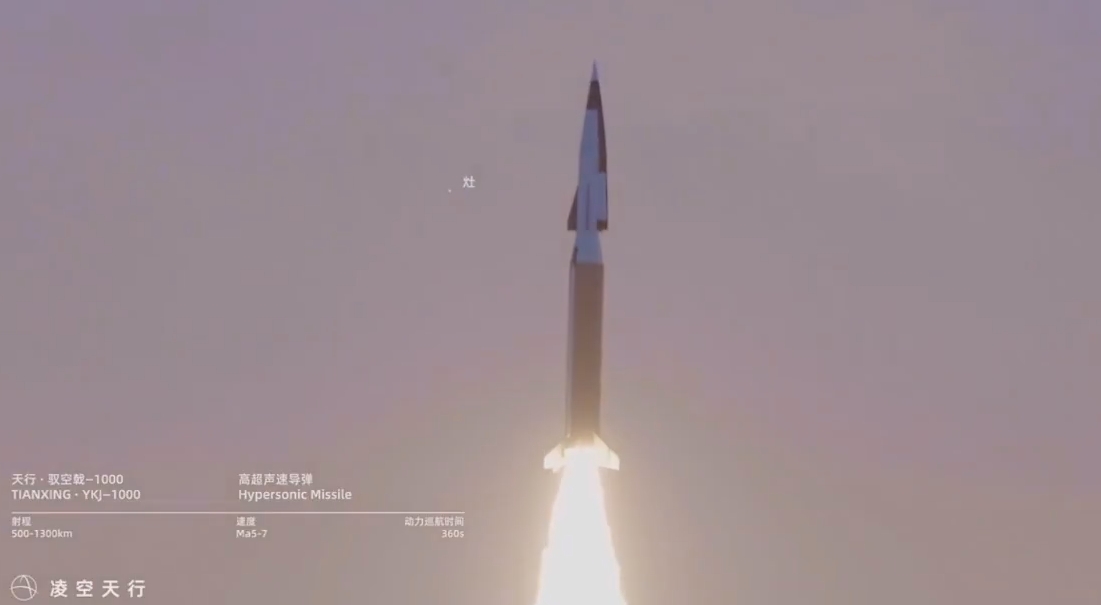
China’s YKJ-1000 hypersonic missile, capable of Mach 7 speeds and priced at just US$99,000, is reshaping global defence strategy and Indo-Pacific power dynamics. Explore how Lingkong Tianxing’s breakthrough disrupts missile-defence economics and accelerates hypersonic proliferation.
I can see use for both expensive hypersonics and dirt cheap systems like this which will still be expensive to shoot down. I would imagine what’s more important than the cost itself is how quickly and easily it can be produced. If you can have dark factories pumping these things out 24/7 then there’s no counter that the US or their toadies can have to that. If we learned one thing from Ukraine it’s that the US is structurally incapable of ramping up mass industry.
Yeah, Iran proved you don’t need the most advanced missiles, just enough to overwhelm the enemy’s interceptors. And defense is always more expensive than offense, usually by orders of magnitude.
I’m sure having a mix of both in your arsenal is the most optimal play, especially if you can hold back the more advanced stuff while your enemy is already tapping out after being hit with your cheaper stockpile.
I highly doubt that China wants to use Iranian missile strikes as a model. Iranian missiles displayed poor accuracy, which made counterforce targeting via conventional warheads infeasible. Iranian missile strikes had practically no impact on Israeli military operations. Israeli airbases still functioned, the Israeli chain of command was unaffected. Yemeni missile strikes using Iranian designed missiles aimed at US aircraft carriers complicated operations, even resulted in aircraft going overboard due to evasive maneuvers, but at the end of the day did not land a hit. China does not want to enter into a war with the US with that. China wants to destroy air bases and sink aircraft carriers. China, as a state actor which is a global superpower, wants their weapons to have high end strategic and tactical effects. China has little care for trying to use up interceptor stocks, they want to sink Nimitz class aircraft carriers and destroy Guam and US airbases in Japan within the first few hours of a conflict, or at least have a credible capability to do so, to establish deterrence.
If we learned one thing from Ukraine it’s that the US is structurally incapable of ramping up mass industry.
Does China want to fight that kind of war though, a drawn out multi year attritional war where a city with a pre war population of 60 000 takes 15+ months to capture, a war in Ukraine that has gone on for longer than the US campaign against Japan in the Pacific during WW2. I doubt China wants to fight that kind of war over Taiwan for instance. If China wants to seize Taiwan, they would want to be quick and decisive, and to deter any US intervention either out of fear of Chinese capabilities, or by quickly sinking an aircraft carrier or destroying US airbases if the US does intervene, in a forcible display of Chinese military capabilities. That’s what my read is right now.
I can see use for both expensive hypersonics and dirt cheap systems like this which will still be expensive to shoot down
Some sort of Hi-Lo mix could be useful, I can see the value in that. There are always lots of targets to prosecute in war, and not everything needs a high end system to hit it. In that case, it just needs to be more difficult to shoot down than a cruise missile, and probably won’t be fired at highly defended targets. In Ukraine, Russia does this a lot, firing ballistic missiles at areas with no or minimal systems to defend against ballistic strikes. Something like this, cheaper than an Iskander-M or Kinzhal, but still very capable, would be very useful for Russia right now. But that brings me back to the first question: is China interested in fighting or preparing to fight that kind of war? Are they going to structure their rocket forces like this? I have doubts.
First, let’s remember that Russia tried to do exactly what you’re suggesting in the first two weeks. They rolled up to Kiev and gave Ukrainians an ultimatum. This almost worked when the agreements were initialled in Istanbul. Then the west told Ukrainians that they would back them to the end and that they had to fight. That’s how the war of attrition started. Did Russia want that kind of war? Clearly not. Did they have a choice in the end, also clearly not.
Similarly, China will likely try doing what you suggest, but then if the US and the vassals decide not to back down they’re going to find themselves in a war of attrition as well. However, there’s a big difference between South Asia and Ukraine in terms of logistics. While the west was able to funnel weapons into Ukraine easily through Europe, it will be much harder to do with Taiwan given that its an island. I personally can’t see how the US could sustain a long term campaign against China, especially given that China controls many critical inputs for weapons production, and existing stocks are now severely depleted in Ukraine.
So, while China would absolutely not want to be dragged into a protracted war, it would be sheer idiocy for them not to plan for one while hoping for a quick decisive win.


I can see use for both expensive hypersonics and dirt cheap systems like this which will still be expensive to shoot down. I would imagine what’s more important than the cost itself is how quickly and easily it can be produced. If you can have dark factories pumping these things out 24/7 then there’s no counter that the US or their toadies can have to that. If we learned one thing from Ukraine it’s that the US is structurally incapable of ramping up mass industry.
Yeah, Iran proved you don’t need the most advanced missiles, just enough to overwhelm the enemy’s interceptors. And defense is always more expensive than offense, usually by orders of magnitude.
I’m sure having a mix of both in your arsenal is the most optimal play, especially if you can hold back the more advanced stuff while your enemy is already tapping out after being hit with your cheaper stockpile.
I highly doubt that China wants to use Iranian missile strikes as a model. Iranian missiles displayed poor accuracy, which made counterforce targeting via conventional warheads infeasible. Iranian missile strikes had practically no impact on Israeli military operations. Israeli airbases still functioned, the Israeli chain of command was unaffected. Yemeni missile strikes using Iranian designed missiles aimed at US aircraft carriers complicated operations, even resulted in aircraft going overboard due to evasive maneuvers, but at the end of the day did not land a hit. China does not want to enter into a war with the US with that. China wants to destroy air bases and sink aircraft carriers. China, as a state actor which is a global superpower, wants their weapons to have high end strategic and tactical effects. China has little care for trying to use up interceptor stocks, they want to sink Nimitz class aircraft carriers and destroy Guam and US airbases in Japan within the first few hours of a conflict, or at least have a credible capability to do so, to establish deterrence.
Exactly, once they run through the interceptors, then you start to hit stuff with your good missiles.
Does China want to fight that kind of war though, a drawn out multi year attritional war where a city with a pre war population of 60 000 takes 15+ months to capture, a war in Ukraine that has gone on for longer than the US campaign against Japan in the Pacific during WW2. I doubt China wants to fight that kind of war over Taiwan for instance. If China wants to seize Taiwan, they would want to be quick and decisive, and to deter any US intervention either out of fear of Chinese capabilities, or by quickly sinking an aircraft carrier or destroying US airbases if the US does intervene, in a forcible display of Chinese military capabilities. That’s what my read is right now.
Some sort of Hi-Lo mix could be useful, I can see the value in that. There are always lots of targets to prosecute in war, and not everything needs a high end system to hit it. In that case, it just needs to be more difficult to shoot down than a cruise missile, and probably won’t be fired at highly defended targets. In Ukraine, Russia does this a lot, firing ballistic missiles at areas with no or minimal systems to defend against ballistic strikes. Something like this, cheaper than an Iskander-M or Kinzhal, but still very capable, would be very useful for Russia right now. But that brings me back to the first question: is China interested in fighting or preparing to fight that kind of war? Are they going to structure their rocket forces like this? I have doubts.
First, let’s remember that Russia tried to do exactly what you’re suggesting in the first two weeks. They rolled up to Kiev and gave Ukrainians an ultimatum. This almost worked when the agreements were initialled in Istanbul. Then the west told Ukrainians that they would back them to the end and that they had to fight. That’s how the war of attrition started. Did Russia want that kind of war? Clearly not. Did they have a choice in the end, also clearly not.
Similarly, China will likely try doing what you suggest, but then if the US and the vassals decide not to back down they’re going to find themselves in a war of attrition as well. However, there’s a big difference between South Asia and Ukraine in terms of logistics. While the west was able to funnel weapons into Ukraine easily through Europe, it will be much harder to do with Taiwan given that its an island. I personally can’t see how the US could sustain a long term campaign against China, especially given that China controls many critical inputs for weapons production, and existing stocks are now severely depleted in Ukraine.
So, while China would absolutely not want to be dragged into a protracted war, it would be sheer idiocy for them not to plan for one while hoping for a quick decisive win.