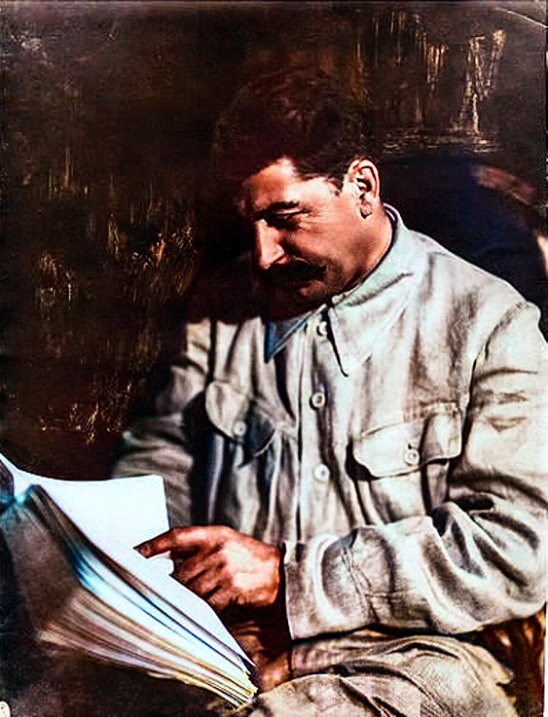
On December 4th, Rwanda’s Paul Kagame and the DRC’s Felix Tshisekedi signed the Washington Accords for Peace and Prosperity (pictured above). Trump boasted that he was settling a war that had gone on for decades, and remarked, idiosyncratically, “[…] and now they’re going to spend a lot of time hugging, holding hands […]”
A few days later, the M23 militia (backed by Rwanda) advanced into Uvira, a city near the DRC’s eastern border with Burundi and a major commercial and strategic location in the region. Burundi, although a small country, is a significant ally to the DRC and has sent thousands of soldiers to aid them during conflicts; this offensive by M23 aims to cut off a direct route between the two, though they do still share quite a long border over Lake Tanganyika. Tens of thousands of civilians (possibly up to 200,000) fled as M23 approached.
Signed almost simultaneously with the Accords was a Strategic Partnership Agreement between the DRC and the United States, which effectively threw open its critical minerals in the east to American exploitation. These minerals include tin, tungsten, and tantalum, which is vital for many industries. The irony is that M23 has been taking territory in the eastern DRC in order to transport these very minerals to Rwanda and onwards to global supply chains. Signing the Accord was, therefore, a remarkably pointless endeavour for everybody involved. Burundi and the DRC have complained, calling for sanctions on Rwanda, and appeasing to Trump’s pride, calling this a “slap in the face to the United States”, though I doubt the US is ultimately all that bothered about it one way or another.
Last week’s thread is here. The Imperialism Reading Group is here.
Please check out the RedAtlas!
The bulletins site is here. Currently not used.
The RSS feed is here. Also currently not used.
The Zionist Entity's Genocide of Palestine
Sources on the fighting in Palestine against the temporary Zionist entity. In general, CW for footage of battles, explosions, dead people, and so on:
UNRWA reports on Israel’s destruction and siege of Gaza and the West Bank.
English-language Palestinian Marxist-Leninist twitter account. Alt here.
English-language twitter account that collates news.
Arab-language twitter account with videos and images of fighting.
English-language (with some Arab retweets) Twitter account based in Lebanon. - Telegram is @IbnRiad.
English-language Palestinian Twitter account which reports on news from the Resistance Axis. - Telegram is @EyesOnSouth.
English-language Twitter account in the same group as the previous two. - Telegram here.
Mirrors of Telegram channels that have been erased by Zionist censorship.
Russia-Ukraine Conflict
Examples of Ukrainian Nazis and fascists
Examples of racism/euro-centrism during the Russia-Ukraine conflict
Sources:
Defense Politics Asia’s youtube channel and their map. Their youtube channel has substantially diminished in quality but the map is still useful.
Moon of Alabama, which tends to have interesting analysis. Avoid the comment section.
Understanding War and the Saker: reactionary sources that have occasional insights on the war.
Alexander Mercouris, who does daily videos on the conflict. While he is a reactionary and surrounds himself with likeminded people, his daily update videos are relatively brainworm-free and good if you don’t want to follow Russian telegram channels to get news. He also co-hosts The Duran, which is more explicitly conservative, racist, sexist, transphobic, anti-communist, etc when guests are invited on, but is just about tolerable when it’s just the two of them if you want a little more analysis.
Simplicius, who publishes on Substack. Like others, his political analysis should be soundly ignored, but his knowledge of weaponry and military strategy is generally quite good.
On the ground: Patrick Lancaster, an independent and very good journalist reporting in the warzone on the separatists’ side.
Unedited videos of Russian/Ukrainian press conferences and speeches.
Pro-Russian Telegram Channels:
Again, CW for anti-LGBT and racist, sexist, etc speech, as well as combat footage.
https://t.me/aleksandr_skif ~ DPR’s former Defense Minister and Colonel in the DPR’s forces. Russian language.
https://t.me/Slavyangrad ~ A few different pro-Russian people gather frequent content for this channel (~100 posts per day), some socialist, but all socially reactionary. If you can only tolerate using one Russian telegram channel, I would recommend this one.
https://t.me/s/levigodman ~ Does daily update posts.
https://t.me/patricklancasternewstoday ~ Patrick Lancaster’s telegram channel.
https://t.me/gonzowarr ~ A big Russian commentator.
https://t.me/rybar ~ One of, if not the, biggest Russian telegram channels focussing on the war out there. Actually quite balanced, maybe even pessimistic about Russia. Produces interesting and useful maps.
https://t.me/epoddubny ~ Russian language.
https://t.me/boris_rozhin ~ Russian language.
https://t.me/mod_russia_en ~ Russian Ministry of Defense. Does daily, if rather bland updates on the number of Ukrainians killed, etc. The figures appear to be approximately accurate; if you want, reduce all numbers by 25% as a ‘propaganda tax’, if you don’t believe them. Does not cover everything, for obvious reasons, and virtually never details Russian losses.
https://t.me/UkraineHumanRightsAbuses ~ Pro-Russian, documents abuses that Ukraine commits.
Pro-Ukraine Telegram Channels:
Almost every Western media outlet.
https://discord.gg/projectowl ~ Pro-Ukrainian OSINT Discord.
https://t.me/ice_inii ~ Alleged Ukrainian account with a rather cynical take on the entire thing.
 DM me to feature effort posts and good threads in the newsmega/newscomm here (including your own).
Please review and provide feedback on revised comm policy and rules
@xiaohongshu@hexbear.net and others discuss weakening Chinese domestic consumption and the importance of their trade surplus to the status quo
Previous posts of the week: Oct 27 | Nov 3 | Nov 10 | Nov 17 | Nov 24 | Dec 1 | Dec 8
@xiaohongshu@hexbear.net and others discuss weakening Chinese domestic consumption and the importance of their trade surplus to the status quo
Reuters: EU changes tack from using frozen Russian assets to joint borrowing for Ukraine
Buried lede:
The loan to Ukraine based on the joint borrowing would only be repaid by Ukraine once it receives war reparations from Moscow. Until then, the Russian assets would remain immobilised and the EU reserved the right to use them to repay the loan, according to the text.
So the assets are permanently frozen until Russia pays “war reparations” (however the EU chooses to define that). Still theft with extra steps.
In the wake of the horrific massacre in Bondi, NSW, Australia the prime minister has announced an intention to adjust gun limits and start a buyback. Given that one of the killers had access to 6 firearms new limits are likely to be below that (A sport’s shooter may want 2 or 3 calibres, and potentially shotguns for clay pigeon/lever actions for gallery so this is perhaps a bit stringent?).
The NSW premier has announced an intention to crack down on [pro palestinian] protests and expressed that if it wasn’t unconsitutional he would want to bill protestors for the cost of police presence.
This is coupled with broadly uncritical adoption of fringe Zionist positions on what constitutes antisemestism :(
My heart goes out to the Australian Jewish community. Targetting random civvies halfway across the world for crimes some government that is ethnically related has done is completely unacceptable. Racist hatred is always beyond the pale, and the events at Bondi clearly show Australia needs to confront racism and right wing extremist terrorism festering in our culture.
I must also say though I am disappointed with the government response and lack of cohesive vision to protect other minorities that face homicidal hatred. Including our own indigenous people, and migrants from places like India, not to mention the rampant femicide.
Hatred festers here, I think it is misdirection to target left wing protestors and the broadly peaceful gun owning population, when this appears to be right wing religious nutters and intelligence failures/inappropriate gun licensing.
Law enforcement is currently outside of a storage unit facility in Salem, NH apparently either searching for or have found what is believed to be the shooter in both the Brown University shooting and the murder of the MIT nuclear fusion researcher/professor.
No announcements or press conferences yet, but this is all kind of setting off my latent
 , although supported only by vibes and suspicions at the moment. Fully expecting another
 “The suspect was known to law enforcement” moment, though.
EDIT: This is starting to look more like evidence gathering than the suspect being in the storage facility.
EDIT 2: Shooter found dead in storage unit, identified as 48-year old Portuguese national and Brown student Claudio Neves Valente.
Victor Grossman died in Berlin yesterday at age 97. He was one of a handful of humans who grew up in capitalism in America as Stephen Wechsler, escaped to socialism in the GDR, and then was forced to submit to capitalism in united Germany again.
From Junge Welt:
spoiler
Victor Grossman has died. The journalist, author, and translator passed away on Wednesday in Berlin at the age of 97. This was reported by junge Welt, citing his family. Grossman was born Stephen Wechsler in New York City in 1928. As a teenager, he joined the youth organization of the Communist Party of the USA in 1942 and, while studying at Harvard, also joined the party itself. While serving as a US soldier stationed in Bavaria, he deserted in 1952 after receiving a summons to appear before the military tribunal in Nuremberg. Because he had not disclosed his Communist Party membership, he faced imprisonment. Near Linz, he swam across the Danube to reach the Soviet occupation zone of Austria. From there, he went to the young GDR, where, on the advice of a Soviet officer, he adopted the name Victor Grossman.
Grossman studied journalism in Leipzig between 1954 and 1958, subsequently working in Berlin as an editor and proofreader, where he established the Paul Robeson Archive at the Academy of Arts. From 1968 onward, he worked as a freelance writer, translator, and public speaker. He recognized the decline of the GDR early on and, as he stated in a 2023 jW interview, was “despairing” of it. After 1990, he joined the PDS (Party of Democratic Socialism), remained active in publishing, and took an active part in political life well into old age. An obituary will follow.
If you want to read the obituary from the same source:
spoiler
When you joined the Army, you had to sign a list. It contained about 25 organizations, and by signing, you confirmed that you weren’t a member of any of them, Victor Grossman told us when we spent three hours talking about his life in his apartment on Karl-Marx-Allee in Berlin, which he had moved into in 1961, in 2023, just before his 95th birthday. “I was definitely in a dozen,” he said, smiling, with the strong American accent he still used to speak the language of the country he had come to in 1952, even after more than seven decades.
Why hadn’t he simply disclosed his membership when he was drafted? “Because I was afraid,” he said without hesitation. In the US, since 1950, every member of the Communist Party or an affiliated organization had to register individually as a “foreign agent.” Failure to do so could result in severe prison sentences. Victor hadn’t done it. Much later, he met a comrade who had refused to sign the list back then. After some time, he had been “dishonorably” discharged, but without punishment. The price: He ended up on a blacklist that was kept everywhere he applied for jobs.
Stephen Wechsler, as Victor was then known, had signed the contract and came to Bavaria as a soldier in the US Army. The soldiers who had reported physical injuries during basic training to avoid overseas service were sent to Korea. When Victor recounted this, his horror at such cynicism was still evident.
It only took a few months before Private Wechsler was caught in some kind of check. When he returned from leave and received a summons from the military court in Nuremberg, he immediately decided to defect. So determined, in fact, that he walked into the KPD (Communist Party of Germany) headquarters in Nuremberg in his uniform and asked the astonished comrades there – unsuccessfully, of course – to smuggle him into East Germany. Determination and resolve were Victor’s most striking qualities.
When I gave him the edited interview to review, he wasn’t satisfied with one aspect: the day he swam across the Danube in Linz had been the most important day of his life—and now it was only mentioned in one sentence. Given the sheer volume of material, this was unavoidable, but the criticism was certainly justified. As he swam across the river, Stephen Wechsler became Victor Grossman. The 24-year-old deserter had been advised to change his name for security reasons by a Soviet officer.
That’s how he came to the young GDR. He studied journalism in Leipzig and met “my Renate,” to whom he was married until her death in 2009. He worked as an editor and proofreader for the Democratic German Report and the foreign broadcasting service, and he established the Paul Robeson Archive at the Academy of Arts. However, this self-assured and direct man never got along with his superiors. He called his work as a freelance writer since 1968 “life-extending.” It was clear that, without ever accepting citizenship or joining the SED (Socialist Unity Party), he had made the GDR more “his” country than many who held office or positions there. When we talked about its decline and demise, he used words like “despair” and “bitterness.” “The party was practically gone,” he said of the second half of the 1980s.
He joined the PDS (Party of Democratic Socialism) and became involved in anti-fascist organizations. Even in his later years, he was a familiar face at events large and small in Berlin. As the Left Party slid deeper into crisis, Victor couldn’t rest easy. The leadership, he said, only wanted to conduct politics in parliaments and governments, no longer on the streets. But it was on the streets, in concrete struggles, as the young communist had learned in the 1940s and never forgotten, that a party’s true “alive” nature became apparent. The word was important to him in this context: he longed for a “living,” militant left-wing party that spoke to people in their everyday lives—not one that merely greeted them from posters every four years just before an election. When we spoke in 2023, he said he didn’t even know if he was still listed as a member. The comrade who had always collected the dues had died.
Victor Grossman died in Berlin on Wednesday at the age of 97. Another person has passed away who will be missed. “We did what we could,” he told me. With him, it was true.
I only learned of him last year, though the name must have crossed my eyes before. The quote I read went something like, “in the GDR you never had to despair that you needed to find a job. You never had to worry about losing income. You have no idea how good that feeling was. […] If you didn’t like your job, they tried to find something else for you, anything you wanted to do, you could do somehow…”
I think about that a lot. Hate my job, and just signed on for the money and because I have to pay child support. Fuck Germany, personally I think it’s more neoliberal than even the UK (by European standard I mean)
So long, Victor…
Follow up to Senator Budd’s letter from earlier today:
Trump orders reclassification of marijuana, downgrading its drug schedule, the article gets some facts wrong, so maybe pbs is using llms?
In a followup to this post about a BC First Nation voting on whether or not to approve a large resource project and an associated benefits agreement, the community vote happened and the result was approximately 80% in favour of the project (archive link).
Held over the weekend, 77.4 per cent of eligible Tahltan Nation voters backed a proposed Impact Benefit Agreement (IBA) connected with the Eskay Creek revitalization project, according to official results published by the Tahltan Central Government.
Unlike other mines, Eskay Creek is subject to Canada’s first consent-based decision-making agreement with a First Nation. Signed in 2022 between the province and the Tahltan Central Government, the agreement explicitly states the project cannot proceed without the nation’s free, prior and informed consent.
The K’adesibē post following the vote is available here.
Danish Social Democrats Double Down on Racism Despite Growing Dissent
Yesterday, Denmark’s social democrat-led right-wing regime announced two new policies targeting the Nordic hermit kingdom’s Muslim minority. In agreement with other right-wing and far-right parties, the regime will reopen 5,000 disability pension cases, a measure explicitly justified as a crackdown on “organised fraud.”
The racial profiling inherent in the policy is not merely implied; it is explicit. It exclusively targets disabled persons born outside Denmark who live in low-income public housing developments with more than 1,000 residents. The move has been condemned by independent human rights groups, NGOs, and the social workers’ union, whose members will be forced to implement the reviews.
Read more...
These social workers condemn the policy for instilling fear and insecurity among vulnerable disabled people. They also sharply criticise the diversion of scarce resources to harass Muslim-coded individuals, noting that years of austerity have already left the disability sector desperately underfunded.
The second policy, presented by Rasmus Stoklund, the Islamophobic hardliner heading the Social Democrat-controlled Ministry of Integration, seeks to expand the existing ban on burqas and niqabs in public spaces to include educational institutions.
Both policies, designed to harass and demonise Muslims, flow naturally from Danish leader Mette Frederiksen’s national-conservative line. For years, her party has copied the far right’s playbook, using racist scapegoating to distract from the steady erosion of the welfare state. But Islamophobia no longer commands the electoral power it once did.
The party’s crisis became unmistakable after last month’s local elections, where the Social Democrats suffered their worst results in generations and lost symbolic strongholds, including Copenhagen. Nationally the crisis is deep as well, a recent poll awarded them just 16.3% of the vote, a result that, if replicated in a general election, would be their worst since 1898. That figure also falls within the margin of error of the 16% attributed to the centre-left Socialist People’s Party. For the Social Democrats, losing their status as the largest party would be humiliating in itself; losing it to the left would be much worse.
Under normal circumstances the Social Democratic party does not tolerate internal dissent but now the catastrophic results have emboldened internal critics. Local councillors, fresh from campaigns where voters punished the national leadership’s rightward drift, are now openly criticising Frederiksen’s embrace of the far right—a level of dissent unthinkable a year ago.
Even Stoklund, one of Frederiksen’s closest allies, has been rebuked by Social Democratic councillors and mayors after he criticised poor Muslim families for applying for Christmas charity, arguing it should be reserved for families “who celebrate Christmas,” ie. families who are not Muslim-coded.
For decades, the Social Democrats have triangulated toward the far right, attempting to reclaim voters from the fascist Danish People’s Party. Under Frederiksen, mimicry has metastasized into ideology: the conviction that the party must always be perceived as equally racist as the Danish People’s Party.
This strategy once worked, but it has now seems to have reached its limit. The far right easily adopts more extreme positions to maintain its edge, fascist leader Morten Messerschmidt now openly uses neo-Nazi terminology like “remigration.” Meanwhile, moderate urban voters, who live in a multicultural reality and do not recognise the regime’s racialised bogeymen, are increasingly repelled. At the same time, voters for whom racism is the primary motivation see little reason to choose a Social Democrat imitation when they can vote for the original.
As the crisis deepens, the party leadership is scrambling. On one hand, it has flip-flopped and opened the door to closer alignment with the Socialist People’s Party, the same party it recently denounced as “extreme” during the local election campaign. On the other, it continues to double down on Islamophobia, frantically pressing the racism button in hopes the old familiar tactics will start working again.
The Social Democrats’ core problem is alienation. Many of their voters may harbour racist attitudes, or at least do not see racism as a dealbreaker, but racism is not their sole motivation. Like most Danes, they overwhelmingly support the welfare state. They did not vote Social Democrat merely to make life harder for Muslims; they also believed their ballot was a vote to preserve social protections.
That belief has been thoroughly betrayed. After the 2022 election, the Social Democrats formed a right-wing coalition with their historic rivals, the Liberal Party, and the Moderates, an astroturfed centrist vehicle created to prolong the career of dethroned Liberal leader Lars Løkke Rasmussen.
The coalition promised sober, pragmatic governance, free from the excesses of “the outer wings.” The media-political elite was thrilled, but the project has failed to excite anyone outside newsrooms and parliament.
The alliance alienated voters, rank-and-file members and the labour movement alike. Its popularity collapsed entirely when it abolished a public holiday to fund increased military spending, a decision that enraged nearly everyone, especially blue-collar workers. Implemented without consulting unions or employers, the move brought the traditionally close relationship between the Social Democrats and the labour movement to a freezing point. Social Democratic politicians were disinvited from that year’s May Day celebrations, events they traditionally headline.
Since then, the regime has championed cuts to higher education, dragged its feet in condemning the Gaza genocide—earning Denmark the dubious honour of being the Nordic country with the most pro-Zionist rulers—and handed tax cuts to those who do not need them. All this has unfolded amid the worst cost-of-living crisis in decades.
The government has shown little appetite for tackling soaring food prices. Token gestures like cutting taxes on coffee and chocolate have been widely seen as insultingly inadequate.
Meanwhile, a new harsh welfare reform, officially justified through Reagan-esque racist tropes about immigrant women on benefits, is causing a surge in homelessness.
Frederiksen’s tone-deafness peaked in a bizarre TikTok appearance during the election campaign, where she insisted that imposing an age limit on social media mattered more to her than lowering food prices, raising nurses’ wages, improving public transit, or bringing down rents. Only two priorities ranked higher: tighter immigration controls and more money for an already bloated military.
Voters who once chose the Social Democrats now feel insulted and neglected, and they are no longer easily distracted by racism. When grocery prices go through the roof, no burqa is large enough to hide the fact that you can’t afford to buy what you used to.
No story captures this disillusionment better than that of Arne Juhl, the brewery worker who became the poster child for Mette Frederiksen’s early retirement scheme for blue-collar workers. In 2019, his face was plastered on billboards under the slogan “Now it’s Arne’s turn,” promoting a limited scheme that patched over a rising retirement age the Social Democrats themselves had supported.
Arne symbolised more than just the so-called “Arne pension”; he embodied the voter Frederiksen’s party sought to court: older, white, blue-collar, hard-working, and living in the provincial heartland, far from the woke multiculturalism of the big cities.
Today, Arne symbolises the voter who has had enough. The retired brewery worker who was once the centerpiece in Frederiksen’s efforts to brand herself as pro-welfare, has announced he will vote for the Socialist People’s Party, citing opposition to retirement age hikes, anger over rising food prices, and frustration with the enormous sums spent prolonging the unwinnable war in Ukraine.
As Arne moves left, many other disillusioned voters move right. With no mainstream resistance to reactionary politics, the far right dominates the public conversation. Polls now suggest the right and far right would easily secure a parliamentary majority of 94 out of 179 seats.
The Social Democrats have triangulated themselves into a corner. Their traditional supporters are departing because they see all racism and no welfare. The racists still prefer the original fascist parties. And their right-wing coalition is disintegrating: the Moderates are being wiped out in the polls following a string of bizarre corruption and misconduct scandals, while the Liberal Party more or less openly plans to abandon the Social Democrats after the next election in favour of a right–far right coalition.
The remedy is elusive. Lurching forward like a political zombie and repeating performative racism will not produce different results. A pivot to the centre-left would ring hollow under Frederiksen and is impossible within the current coalition. A genuine reckoning would require a decisive leadership change and years of rebuilding trust—time the party does not have, with elections due within the year.
The Social Democrats find themselves in a trap entirely of their own making. By abandoning their traditional constituents in pursuit of the far right, they have hollowed themselves out. The racism they once weaponized has become a dead end, leaving the party estranged from both its reason to exist and its base.

More than 20 Republican senators have signed onto a letter urging Trump to keep marijuana a Schedule I drug as he prepares to potentially loosen regulations on it. Led by North Carolina Sen. Ted Budd, they say marijuana continues to be dangerous and that allowing it to be used more widely will “undermine your strong efforts to Make America Great Again.”
They replaced the writer’s room with a llm and now it’s hack and too on-the-nose!
Good news! The Trump administration reports that inflation went down and your rents are zero! Congrats.

Major issue was zeroing out rent/OER in Oct. That will artificially lower YoY rates until Apr (assuming no BLS adjustments).
Some of the main forces of the communist movement have united to create the Nepali Communist Party. The ten parties that have come together are:
- Communist Party of Nepal (Maoist Centre).
- Communist Party of Nepal (Unified Socialist).
- Nepal Communist Party.
- Communist Party of Nepal (Socialist).
- Nepal Socialist Party.
- Janasamajbadi Party.
- Communist Party of Nepal (Maoist-Socialist).
- Communist Party of Nepal (Communist).
- Communist Party of Nepal (Maoist).
- Deshbhakta Samajbadi Morcha.
There was a major rally in Surkhet (Karnali), the Red Fort of Nepal last week. The party’s coordinator, Comrade Prachanda, addressed the people and the party welcomed into its ranks many young people who had been part of the protests just a month or so ago.
Saw someone make the joke that “Nepal now has 21 communist parties instead of 30”
Bolivia Declares Economic Emergency and Hikes Diesel 160% - Bloomberg
Bolivia’s new government declared an economic emergency and issued a series of radical measures, including scrapping fuel subsidies and loosening the exchange rate regime. Secretary of State Marco Rubio expressed US support for the policies, and said in a statement that US officials are currently in Bolivia seeking to facilitate investments.
Article
The move triggered an 86% jump in the price of gasoline and more than 160% for diesel, the most abrupt energy price adjustments in the nation’s recent history.
The reforms announced Wednesday night by President Rodrigo Paz represent a decisive break from two decades of socialist economic policy and aim to rein in one of the world’s largest fiscal deficits and an inflation rate of 21%.
“Eliminating poorly-designed subsidies does not mean abandonment, but order, justice and real, transparent redistribution,” Paz said in a broadcast with his cabinet. “This will allow the generation of additional fiscal resources to be shared between the central and regional governments.”
Some fuel stations La Paz suspended sales as drivers rushed to fill their tanks ahead of the price rises, according to local media reports. The new prices will remain in place for six months before being reassessed.
Some of the region’s most-heavily subsidized fuel, as well as declining natural gas output, has drained Bolivia’s foreign reserves, causing shortages of both fuel and dollars and creating a drag on the economy.
Secretary of State Marco Rubio expressed US support for the policies, and said in a statement that US officials are currently in Bolivia seeking to facilitate investments.
The cuts were accompanied by social protection measures, Paz said, including a 20% increase in the minimum wage next year to 3,300 bolivianos ($479).
Renta Dignidad — a benefit for elderly citizens without a pension — will rise by 150 bolivianos ($22), while a school bonus for students in public schools will increase by 100 bolivianos ($15). Both are increases of 50%.
The government, which took office last month, also announced an extraordinary cash-transfer program for the most vulnerable families.
“From a political standpoint, we expect some pushback down the road because the new measures will lead to a large pickup in inflation,” said Ramiro Blazquez, a strategist at StoneX Securities, in response to written questions. “On the positive side polls show that President Paz remains one of the most popular politicians in the region. Hence, we think that the government, at least at this stage, has the political capital to carry out the reforms.”
The decree also authorizes the central bank to secure liquidity financing lines, amend internal regulations, issue external financial instruments, conduct foreign-exchange hedging operations, and carry out currency swaps to stabilize the balance of payments — an option recently discussed with US officials in Washington.
Paz also announced a program to promote and protect domestic and foreign investments to ensure legal and tax stability for up to 15 years. That includes guarantees that future regulatory changes will not apply to protected investments without explicit investor consent.
The decree further instructs the central bank to transition to a “new exchange-rate regime,” potentially ending the fixed exchange rate in place since 2011, which set the boliviano at 6.96 per dollar, compared with nearly 10 bolivianos in the parallel market.
World Cup news that no one asked for
Fans are going to be charged to enter the fan zones (not stadiums)
The first time.

Venezuelan Navy Escorts Vessels in Defiance of Trump’s Blockade Threat
Pentagon officials, surprised by President Trump’s orders, scrambled to work out a plan to halt sanctioned tankers as Nicolás Maduro, Venezuela’s leader, vowed resistance.
more
Nicolás Maduro, the leader of Venezuela, ordered his navy to escort ships carrying petroleum products from port, risking a confrontation with the United States on the high seas as he defied President Trump’s declaration of a “blockade” aimed at the country’s oil industry. Several ships sailed from Venezuela toward Asia with a Venezuelan naval escort between Tuesday evening and Wednesday morning, said three people familiar with the transits. None of the commercial vessels are on the list of sanctioned tankers the United States is threatening to target. But the recent cascade of events, set off by the Trump administration’s seizure of a tanker last week and then by the president’s order of a partial “blockade” on Tuesday, increased the likelihood of a violent conflict.
In the months since Mr. Trump began carrying out a pressure campaign against Venezuela, which includes lethal boat strikes that are widely deemed illegal by law experts, Mr. Maduro has refrained from answering with force. But that is being tested as Mr. Trump aims to drain the country’s oil revenues, the lifeblood of Venezuela’s economy, by cutting off some tanker traffic and seizing the oil. Mr. Trump has talked repeatedly over the years about taking oil from Venezuela and the Middle East, and one of his envoys pushed Mr. Maduro to give greater access to American oil companies in secret negotiations this year. Venezuelan oil has become a focus of Mr. Trump’s pressure campaign aimed at ousting Mr. Maduro, though publicly the administration frames it as a counternarcotics effort.
The three ships that left the Port of José on the Caribbean coast of Venezuela carried urea, petroleum coke and other oil-based products, said two of the people familiar with the transits, who spoke on the condition of anonymity because of the sensitivities. The third person familiar with the matter, a U.S. official, said Washington was aware of the escorts and was considering various courses of action. The vessels leaving the port were not on a list of sanctioned vessels maintained by the Treasury Department, according to a review by The New York Times. Venezuela’s state oil company, known as PDVSA, said in a statement on Wednesday that ships connected to its operations were continuing to sail “with full security, technical support and operational guarantees in legitimate exercise of their right to free navigation.”
About 40 percent, or nearly 180, of the tankers that have transported Venezuelan crude in recent years have been placed under U.S. sanctions, according to Samir Madani, co-founder of TankerTrackers.com. There were more than 30 such vessels operating in Venezuela earlier this month, the group said. The vessels have a history of transporting oil from countries under U.S. sanctions. Chinese private buyers account for 80 percent of Venezuela’s oil sales, but Mr. Trump has not pressured China to curb those purchases. He has been focused on a planned summit with China’s leader in Beijing in April.
What Mr. Trump is doing now is outside the realm of nonviolent sanctions and economic coercion on Venezuela and possibly moving up the “escalatory ladder” of military force, said Edward Fishman, a former State Department sanctions specialist. “It’s fundamentally much more aggressive, much more confrontational and much riskier,” he said. “Once you impose a naval blockade, you’re only a stone’s throw away from using kinetic force.” The U.S. Coast Guard and law enforcement officers last week seized an Asia-bound sanctioned tanker, the Skipper, carrying nearly two million barrels of Venezuelan crude. At the time, the Trump administration had already made plans to seize more tankers carrying Venezuelan oil, a U.S. official said. The move infuriated Mr. Maduro, who has vowed to keep oil exports flowing at all costs, said one of the three people. Mr. Maduro called António Guterres, the secretary general of the United Nations, on Wednesday to discuss the tensions. Mr. Guterres told Mr. Maduro of “the need for member states to respect international law” and to de-escalate tensions, according to a U.N. summary of the call.
Mr. Trump has said he will keep seized Venezuelan oil, but it is unclear how that would be legal. The U.S. government did not obtain specific permission from a court to seize the oil last week. The administration did get a federal warrant to seize the Skipper based on the vessel’s history of carrying oil from Iran, an arm of whose military has been designated a foreign terrorist organization by the United States. And separately, U.S. agencies had a right to board the vessel under international law because it had been flying the flag of Guyana when it was not registered there, said William D. Baumgartner, a retired Coast Guard rear admiral who oversaw operations in the Caribbean. “You determine the vessel is stateless and not flying a valid flag,” he said. It is unclear if U.S. officials will follow the same legal route with other tankers by specifically targeting vessels that have transported Iranian oil and that fly a false flag or misrepresent their registration. Until recently, Iran sent condensate oil and a crude derivative to Venezuela to be mixed in with the heavier Venezuelan crude so the country’s oil could be refined. If those shipments restart, the tankers could end up being targets of Mr. Trump’s actions. In the meantime, Russia has been sending those substances to Venezuela.
Mr. Trump’s announcement of a “blockade” caught senior officials at the Pentagon and at Southern Command in Florida by surprise. On Wednesday, they scrambled to figure out the U.S. military’s role in the action, U.S. officials said. Typically, a country’s naval forces take part in a blockade, which is considered an act of war. But Mr. Trump qualified his goal by saying he wanted only to halt U.S.-sanctioned tankers. Within the administration on Wednesday, there was little clarity on whether the U.S. military would lead the effort, or whether law enforcement agencies and the Coast Guard, which is under the Department of Homeland Security, would take the lead, with the Defense Department playing a supporting role. If Mr. Maduro continues to order the Venezuelan navy to escort vessels, that raises the likelihood that the U.S. military will get involved in halting any sanctioned ships — and increases the chances of a military confrontation.
In Venezuela, ordinary citizens have been shocked by Mr. Trump’s remarks about seizing the country’s oil, which suggests Mr. Maduro could have public support for using the military to stand firm against the United States. Likewise, in some Latin American nations, there is growing suspicion that Mr. Trump is trying to provoke Mr. Maduro to take action and create a violent episode that would be a casus belli for expanded U.S. military operations — perhaps even war — against Venezuela. Citizens across the region often cite the history of U.S. imperialism in the Western Hemisphere. Their suspicions are underscored by the bellicose language of Mr. Trump in his announcement, which was as vehement an expression of gunboat diplomacy as anything an American president has said in recent decades.
…
What happens next in response to Mr. Trump’s latest directive is not clear. U.S. Navy vessels in the Caribbean had already been shadowing sanctioned tankers in international waters as they approached Venezuela, aiming to deter them and prompt their captains to turn around, current and former Navy officials said on Wednesday. Barring that deterrence, U.S. commanders and law enforcement officials said they were preparing at least two possible courses of action. One is to identify and seize sanctioned ships with other agencies as a law-enforcement operation, once legal warrants are approved. That would follow the example of the Skipper’s seizure. The other route would involve the use of armed, helicopter-bound U.S. Navy boarding teams from warships in the region, current and former Navy commanders said. That becomes likelier if oil tankers have Venezuelan naval escorts.
“The Trump assumption is that Maduro will simply cave,” Representative Adam Smith of Washington, the ranking Democrat on the House Armed Services Committee, said in an interview. “But there is an alternative scenario: boats get escorts and now we’re going to have to fight to detain them.” American officials said there was another possibility: disabling a tanker’s propulsion system with operators who would need to take care not to cause damage that would lead to a massive oil spill. Whatever the White House and Pentagon are now weighing, “it is a major operation in and of itself,” said James G. Stavridis, a retired four-star admiral and former head of Southern Command.
Listened to the 2nd or 3rd-latest ProlesPod episode and they end it with talking about Atrocity Fabrication and Its Consequences: How Fake News Shapes World Order by A.B. Abrams, which seems like a great book to do a reading group around on here or something.