There's a significant issue with the bread we consume today. While bread was once a fundamental part of civilizations, sustaining families and armies, modern...
If you don’t want to watch a crummy slideshow-documentary that pads the runtime repeating itself:
Industrial bread differs from pre-industrial bread in the following key ways:
Refined Grains instead of Whole Grains
Grain is a plant seed. It has an outer casing (bran, ~%5 by weight) a “seed-embryo” (germ, ~%15 by weight) and store of nutrients to feed the germ through its initial sprouting (endosperm, ~%80 by weight). In most industrial breads, the bran and germ are removed. This improves the shelf-life of any bread you make from it… but it only lasts longer because it now lacks the gem’s nutrients and the bran’s fiber.
Grinding hot and fast, rather than cool and slow
This one is pretty self explanatory. Grinding hot and fast breaks down oils and stuff in the wheat, further reducing the nutritional content of the resulting bread so that it can be produced faster. Older milling techniques also produce larger, less consistently ground flour, leaving more nutrients.
Skipping Fermentation
After you mix the dough, it is left to rise. Sometimes for hours. Sometimes for days. I feel like if you know anything about baking bread, you know this step. It’s the fermentation process. Yeast slowly eats the bread, digesting and transforming it into different nutrients that we have an easier time digesting ourselves. In the same way you cannot fully understand a plant without including the soil it grows in, the microbes and fungi that surround it; the human body does not end at the topmost dermal layer. We are just as inexorably dependent on the microbial world, both within and without our bodies. Digestion begins long, long before the secretion of saliva and the gnashing of teeth .
Industrial bread skips this step. It improves shelf-life and speeds up production.
GMO varietals rather than EMO varietals
Genetically engineered strains of wheat TEND TO select for the highest possible yield of grain for the least land and resources. Wheat that has evolved in conjunction with human agriculture often but not always has a wider nutritional spread, but lower crop yields. Specific species will have specific qualities, GMO or otherwise. You CANNOT just say all GMO is X, all heirlooms are Y. With that disclaimer, it sounds like the high yield GMO plants most frequently used in industrial bread have gluten that is structurally different (more complex? bigger I guess?) to heirloom varietals. It’s harder to digest, but is what lets the bread remain soft for significantly longer.


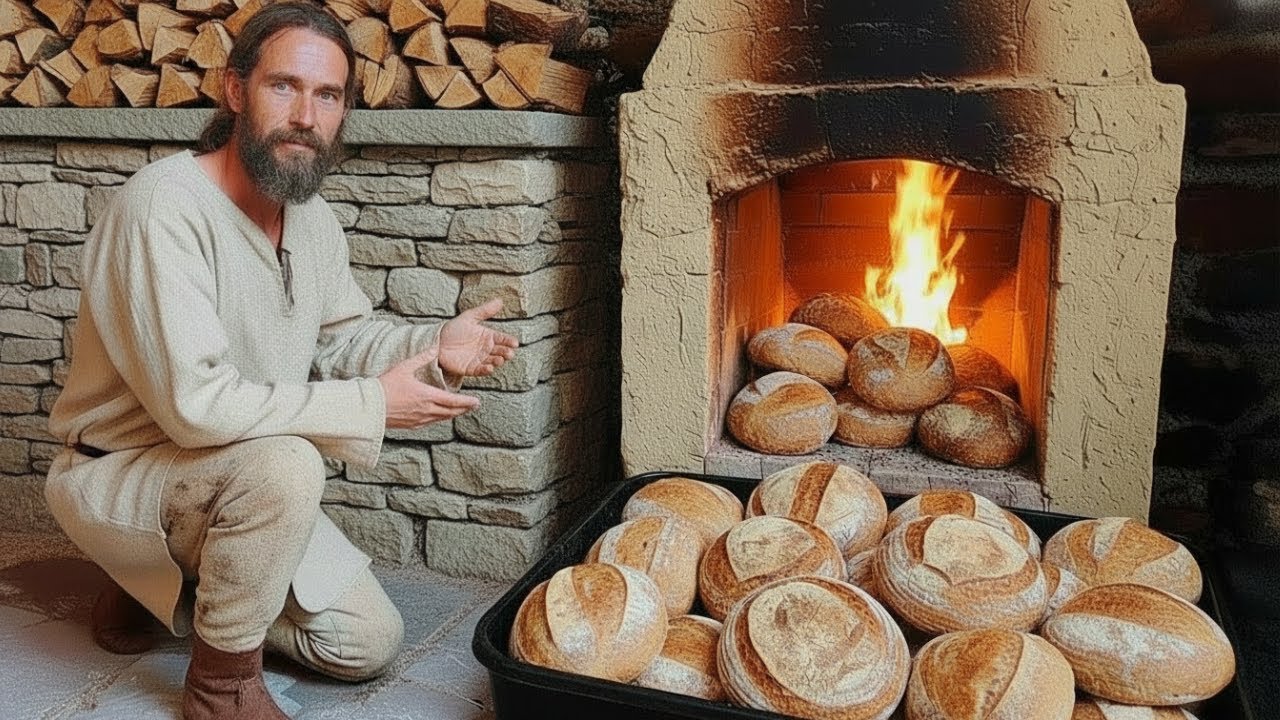
If you don’t want to watch a crummy slideshow-documentary that pads the runtime repeating itself:
Industrial bread differs from pre-industrial bread in the following key ways:
Grain is a plant seed. It has an outer casing (bran, ~%5 by weight) a “seed-embryo” (germ, ~%15 by weight) and store of nutrients to feed the germ through its initial sprouting (endosperm, ~%80 by weight). In most industrial breads, the bran and germ are removed. This improves the shelf-life of any bread you make from it… but it only lasts longer because it now lacks the gem’s nutrients and the bran’s fiber.
This one is pretty self explanatory. Grinding hot and fast breaks down oils and stuff in the wheat, further reducing the nutritional content of the resulting bread so that it can be produced faster. Older milling techniques also produce larger, less consistently ground flour, leaving more nutrients.
After you mix the dough, it is left to rise. Sometimes for hours. Sometimes for days. I feel like if you know anything about baking bread, you know this step. It’s the fermentation process. Yeast slowly eats the bread, digesting and transforming it into different nutrients that we have an easier time digesting ourselves. In the same way you cannot fully understand a plant without including the soil it grows in, the microbes and fungi that surround it; the human body does not end at the topmost dermal layer. We are just as inexorably dependent on the microbial world, both within and without our bodies. Digestion begins long, long before the secretion of saliva and the gnashing of teeth .
Industrial bread skips this step. It improves shelf-life and speeds up production.
Genetically engineered strains of wheat TEND TO select for the highest possible yield of grain for the least land and resources. Wheat that has evolved in conjunction with human agriculture often but not always has a wider nutritional spread, but lower crop yields. Specific species will have specific qualities, GMO or otherwise. You
CANNOTjust sayall GMO is X, all heirlooms are Y. With that disclaimer, it sounds like the high yield GMO plants most frequently used in industrial bread have gluten that is structurally different (more complex? bigger I guess?) to heirloom varietals. It’s harder to digest, but is what lets the bread remain soft for significantly longer.