One of the things I have always hated about american christmas movies is that ALL of them are rich people. Like the most disturbingly rich people. Always presented as like the totally average normal american.
Even for British soaps, I often say to people “count how many people on the show are working class”. Because even on like Eastenders (probably the best of them all) the vast majority of the people on the show are small business owners. The only working class people are working in the factory or the hairdressers and there’s like 6 of them. Everyone else owns a pub, a shop, a salon, a factory, a taxi company, etc etc.
It distorts the view of average life.
this is intentional. the average person outside the imperial core is meant to get an extremely distorted image of american realities, leading credence to the local right wing claiming that prosperity can only be achieved by getting as capitalist as the americans. And given the history of the demise of many socialist and anti-imperialist states, it sadly seems to be working.
One of the things I have always hated about american christmas movies is that ALL of them are rich people. Like the most disturbingly rich people. Always presented as like the totally average normal american.
Not just Christmas movies but pretty much all family themed TV shows in America are set in mansion sized houses in the suburb of a major city while the parents hold middle class jobs.
it’s such an old trope that we’ve had shows subverting it for like 40+ years now, stuff like the simpsons, married with children, malcolm in the middle
stuff like the simpsons
Grimes seeing Homer’s house
Add the “Home Alone” movies and popular sitcom “Friends” to the list, the latter was even featured or mentioned in a video I saw on YouTube once on this exact subject. I remember watching these shows and others mentioned in this topic when younger while being raised in a single-parent apartment with a barely functional beater car, wondering when our telephone or electric service would be cut off next from overdue bills, or when we’d have to call the local food bank for emergency supplies again.
And a lot of those shows subverting the trope have themselves ended up depicting an impossible standard of living for your average person in the US since they first aired, because of how much worse things have gotten.
Malcolm in the middle clears them all
All In The Family, Married With Children, and especially Good Times. In Good Times, they just rented a shitty apartment and constantly worried about being destitute
More historical dramas about elite and wealthy emperors it is
Certainly preferable to doing that in the modern period…
…unless they glorify those emperors.
The difference being that there are no emperors remaining in China and there never will be again.
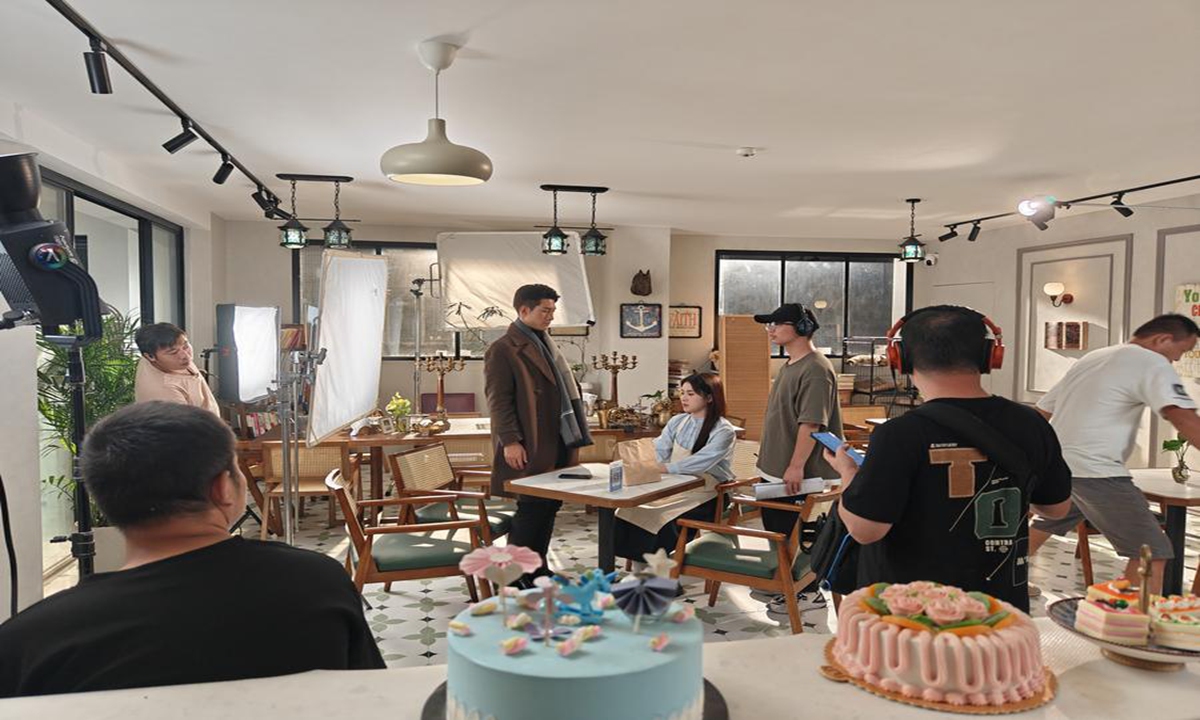
There are so many of these internet dramas lol.
It makes sense - with the wealth inequality deepening and under the current economic downturn, there is a real discontent brewing among the working class who feel that they are the ones who are losing out.
Back in 2017-2019, you don’t think about this at all - there was no such concern as unemployment. As long as you’re working hard, you will be able to find a job. It might not pay well, but there was a lot of room for improvement. The property prices were rising, and everyone was feeling like they are becoming richer, the middle class spent more, created more jobs, and the positive feedback loop caused by the rising land prices.
Post-Covid is a very different world. In just a few short years, people have now turned to getting real worried about losing their jobs, so people prefer to save than to spend. In aggregate, less spending means less profit for the enterprises (and more expensive debt to service), hence the deflation, production cut, job loss and delayed wage payment and stagnation. The rise of AI automation does not help!
So you wouldn’t want people to think about people flaunting their wealth. This is all good. But will the government take actual step to address the wealth inequality problem? This is the real question right here.
Post-quarantine*. Covid is ongoing
You are absolutely correct. I am using it in the BC/AD sense, or closer to the contemporary historical period, pre/post-GFC.
limiting the flaunting of wealth in fictional media is the most liberal approach to wealth disparity I’ve ever heard, though.
It’s bad either way. But this has an added social aspect to it since the economic downturn after Covid. In the BC (Before Covid) era, few people cared about whether China is socialist or capitalist. As long as the economy is growing, opportunities are abundant, people just don’t care. Black cats, white cats, they’re all the same if they catch mice.
Since Covid, more and more people are suddenly finding the mandatory Marxism-Leninism class they used to find boring in college useful, and started to pick up Mao selected works. That’s how things work.
I wish I lived in a place where everyone had to learn Marxism-Leninism, lol. I literally get called a Stalinist several times a week by people who don’t know a damn thing about communism and don’t call me an ML because they literally don’t know that term. Even revisionists in the federal government worse than Gorbachev was might suck less than what I have to deal with. At least if people understood the basics of Marxism-Leninism as a social sciences analysis tool, maybe I’d get called more accurate terms for “filthy commies” as my dad calls us. And maybe I wouldn’t be the only ML I know. And maybe my dad wouldn’t be so destroyed by the Cold War and rabidly anti communist. And maybe there’d be some possibility for the nation to build socialism, better than anywhere in the fucking West anyway.
Trust me it wasn’t that fun. It’s a lot of “writing 3000-character essays about why the party is great” lol. It’s mostly patriotism classes these days. Maybe if you’re lucky and you get a very engaging lecturer, but these people are very rare. Chances are you end up with a lecturer who’s half-assing it and you end up hating the entire thing lol.
I know numerous party members who couldn’t even provide the most basic arguments with Marx lol. I literally don’t know how they passed the exam because the party membership selection process is very stringent (you need to know the right people who can write the recommendation letters for you, and you have to take mandatory ML courses and pass the exams etc. It’s very elitist, at least for those recruited from the academia and high schools)
What I’m getting at is that China calling itself a socialist country and promoting a “Marxist-Leninist ideology”, even though very superficially, is already priming at least some of its people to think about it.
Well, at least some people are thinking about communism as a positive or neutral thing. At least you guys don’t have the residue of the Red Scare making that first step like wading through molasses.
Huh. Party members who don’t understand communism. I guess people in power who couldn’t tell you what a ML is, whether they claim to be communists or to be able to tell you why communism is bad, are a problem everywhere.
I do wonder what ends up more effective in preventing communism in the ordinary people, Western Red Scare methods, or teaching Marxism-Leninism as a science so badly that people hate it. I take back what I said about Gorbachev, at least all he did was kill the USSR in a blaze of glory, the revisionists in Beijing might be doing a lot worse to the global communist movement.
I think you’re too harsh on the Chinese government. A lot of good has been done, and the rapid development of the Chinese economy is evident to anyone.
The real major contention here is whether this NEP/neoliberal model can continue to work in the coming era?
Read my comment here in the news mega this week for detailed discussion.
A lot of people who China’s development from the outside (which is really the outcome from the development started 10+ years ago) and think that the current model can persist forever. But those who live inside it knows that a change is long overdue. Like a kind doctor who refuses/incapable of keeping up with the times and new medical advances, and insists on his traditional methods, eventually he’s going to do more harm than good to the patients.
Could you elaborate on the last part? I know you’ve talked at length before about how western economics have sort of “eroded” attitudes towards marxist schools of thought, especially among policy makers. Is this still true, or even worsening due to the intensifying inequality or are there still policy makers who fall into the “damn times are getting tough where’s my little red book” crowd (if I understand your post correctly)
I know you get a lot of flak here sometimes, but I find you analysis fascinating and your explanations pedagogic. Please keep posting!
If we’re talking about the policy makers, then the old school Mao era central planners were all purged back in the 1990s (Chen Yun et al.). Marxism has been banished to the humanities departments in the academia. The policy making decision is mostly advised by neoclassical economists at this point.
However, there are still mandatory Marxism-Leninism class in universities, which, to be quite frank, are just patriotism classes these days. This is the kind of classes that 99% of the students will find boring except for those politics nerds (you know, the type of people who love to post and argue on leftist internet forums lol), yet it is undeniable that the students are being primed to seek out socialist theories. When life was good, nobody really cared. But in times when the economy isn’t going so well, suddenly you begin to question “is this really the socialism I’m being taught?”
With the rapid development of China’s economy over the past two decades, deep inequalities also began to emerge. In late 2019, there was a small resurgence of reading Mao’s work, mostly by college students from middle class background because these are the people who have the most time to study. The working class is far too exhausted to read theory.
Then Covid hit in 2020 and people suddenly had more time to do some soul searching with Mao. This coincided with the failure of the Chinese economy to pick up pace after abandoning the Zero Covid policy in early 2023. At first, people thought, OK, maybe the economy is still recovering, let’s give it some time. The mood was still optimistic.
During that time, the property prices peaked in 2021 and the Evergrande implosion that unfolded between 2021-2023 also caused many people, especially the middle class and the many corporations that had jumped on to the property buying frenzy in the 2010s, to start losing their wealth.
By mid-2024, it became clear that the economy is unlikely to return to the pre-Covid level. Pessimism began to spread and people started to save money (there is no welfare in China for most people, so losing your job can be a big deal especially if you still have 20-30 years of mortgage to pay), which led to a deflationary spiral. As businesses began to lose profit because people are unwilling to spend, production shrinkage turned into layoffs and wage stagnation. Nearly 40-50% of fresh graduates could not find jobs. The tangping (lying down) movement is picking up pace, as the youth become increasingly disillusioned about their future.
By 2025, all hope is lost. I don’t know of anyone who still believe that we can return to the pre-Covid level of economic spending in a short period. Even the most optimistic think we have to endure until the end of the decade. So, it should not surprise you that some people are beginning to question about the “socialism” in China, which is being made more dissonant by the fact that, on the one hand, great infrastructure building and China becoming a superpower, and on the other, the positive outlook of the 2010s where jobs were abundant and personal wealth was rapidly rising was all gone.
As I have written elsewhere, it all comes down to unleashing the domestic consumer market to offset the export and investment sectors, both of which have now run their courses. However, the massive wealth inequality, which had not been addressed in the decades prior, is exactly what’s causing weak consumption. This is the root cause of the problem, hence what I said before about whether the government is serious about tacking the wealth inequality issue.
Interesting. Surely if, as you’re saying, the wealth disparity is so central to the current economic challenges facing China (both short and long term) there must be some people talking about it? Similar to yourself? Is this something that can be addressed at a local level or is all the power to change things in the hands of the central government? You talked about local government mostly concerning themselves with meeting goals/quotas (often by short-sighted numbers pumping as happened with real estate), but there must be someone yelling “bridges and trains are awesome but i also want socialism to mean having a house and luxury goods”
It’s the elephant in the room. Everyone talks about it, but the leadership will never admit it.
The inequality is built into the system since the 1994 Tax Sharing Reform: read my effort post here from a few months ago. Anyone who tells you why China should or shouldn’t have billionaires but without closely inspecting the historical development during this period, isn’t really tell you anything.
And if we want to interrogate this from a historical materialist perspective, it really is a 2000-year old struggle between a centralized bureaucracy and decentralized regional growth models that has never been resolved over the dozens of dynastic changes throughout centuries in China.
Thank you for the responses. Reading through the older post you linked it seems like the GDP KPI would be an easy place to start. Is there anyone pushing for such reform? Are there any factions making such criticisms of the system either at the federal or municipal level?
Doing just that is, well, it’s not really liberal in the sense that it’s at odds with liberal philosophy, but it’s still quite conceivable for capitalist society to do it.
Doing it along with taking measures to improve society is completely correct (the question is if/how the CPC addresses the underlying problems).
I wonder how much of the wealth flaunting doesn’t actually push people leftward where they see a normative presentation of life that doesn’t overlap with their circumstances and they start to think something should be done about it. Versus if they depict working class life and people think their lot is all that can be attained because that’s all they’d see on TV, etc.
I wonder how much of the wealth flaunting doesn’t actually push people leftward where they see a normative presentation of life that doesn’t overlap with their circumstances and they start to think something should be done about it.
If it actually worked that way the US would have already had a revolution. People don’t work like that, it is much more likely that depictions of that kind push them to see themselves as “temporarily embarrassed millionaires”. Whereas if you depict working class people and their struggles accurately that is much more likely to lead to an increase in class consciousness.
To be fair. US doesn’t allow for dissemination of art that has radical values. Unless we are to consider color revolutions, adventurism and pro-militarism to be radical.
Edit: Yeah there are a lot of satirical critiques aimed at the flaws of the system, but that’s not really radical art. That just promotes ironically participating in the system. “Well shit sucks, but at least I’m aware of it, what can you do? haha”
Is there any evidence of this actually happening? Because all of the places that have socialist realist art have socialist governments prior to that being the case.
The socialist realism art policies of the USSR are not the only examples of art foregrounding the experiences and values of workers, and you can find such art in many countries that never even got close to socialist, from the USA (e.g. Grapes of Wrath) to Japan (e.g. Kani Kosen), along with of course there being such art movements in societies that would later have socialist revolutions (e.g. The Lower Depths, written by Gorky in 1902, 15 years before the revolution)
But the point that I would emphasize more is that opulent fantasies in media generally don’t radicalize people (though perhaps stories of real opulent people profiting from their poverty do), it just produces something on the spectrum from escapist fantasy to a carrot-on-a-stick motivation to live “like that.” The first is a hyper-literalization of the Freire quote about “the dream of the oppressed is to become the oppressor,” i.e. not an aspiration but literally just a private fantasy, and the second is what he actually meant.
Socialist realism is directly descended from pre-revolution art movements like Peredvizhniki.
They heard about the Peaky Blinders cosplayers in Afghanistan and knew they needed to act quickly.

Thank you for attention to this matter, CPC